Category: Odys'sait articles
-
Hybrid educational games: the new frontier of learning through play
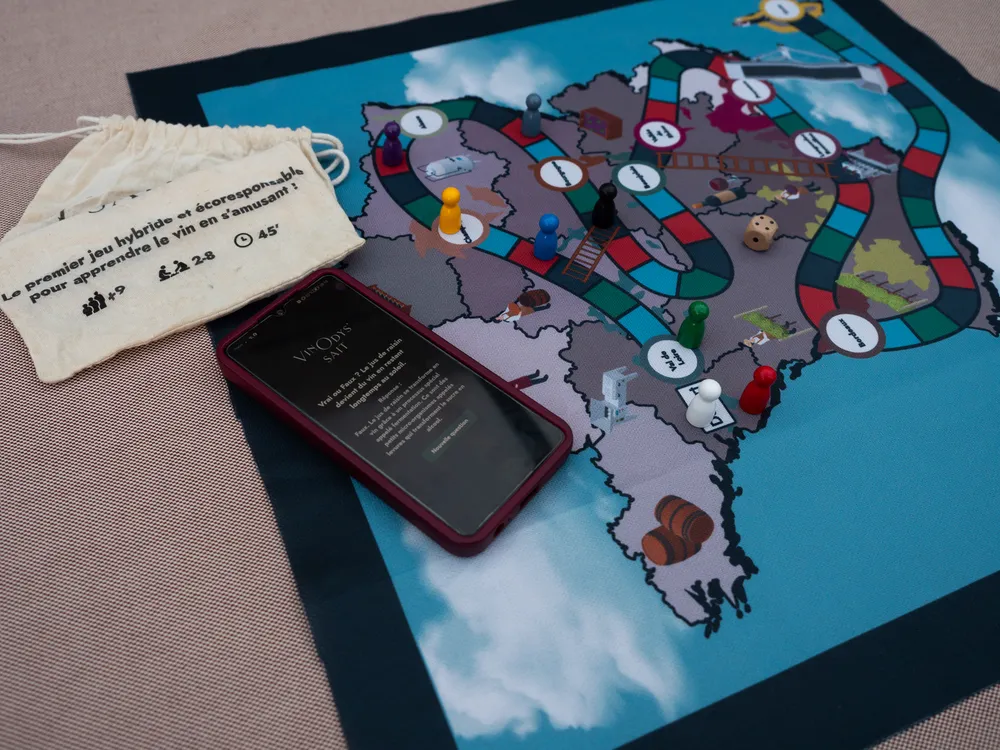
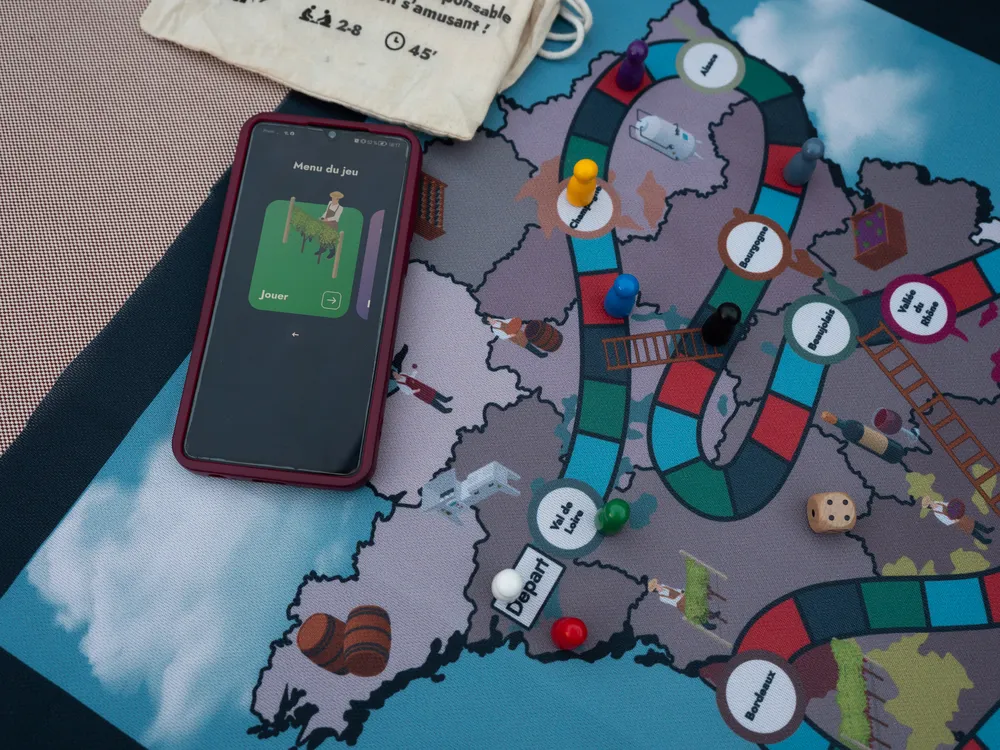
The leisure landscape is undergoing a major revolution with the emergence of Hybrid educational game. This innovative format offers an intelligent fusion between traditional physical hardware and the power of digital tools. Far from being opposed, these two worlds collaborate to offer an augmented user experience. VinOdys’sait, designed by the company Odys’sait, is one of the most accomplished examples of this trend. By combining a tactile game board and an interactive mobile application, this project redefines how we acquire complex knowledge such as oenology. The idea is not to keep our eyes glued to a screen, but to use technology to streamline the rules, bring in multimedia content, and energise the interaction between players around the table.
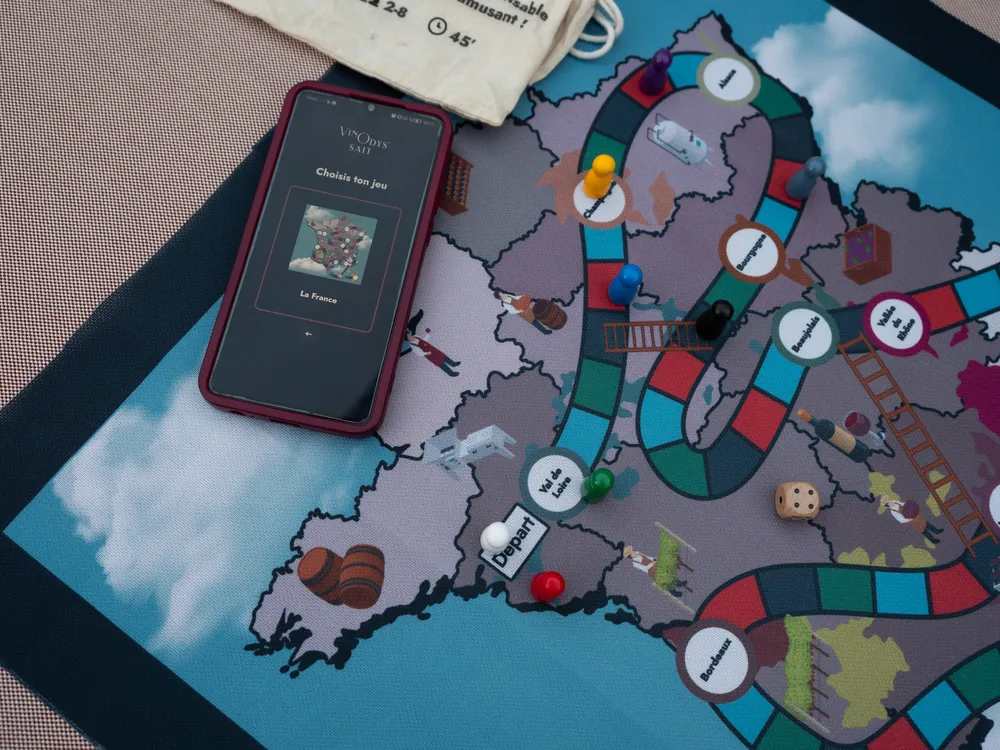
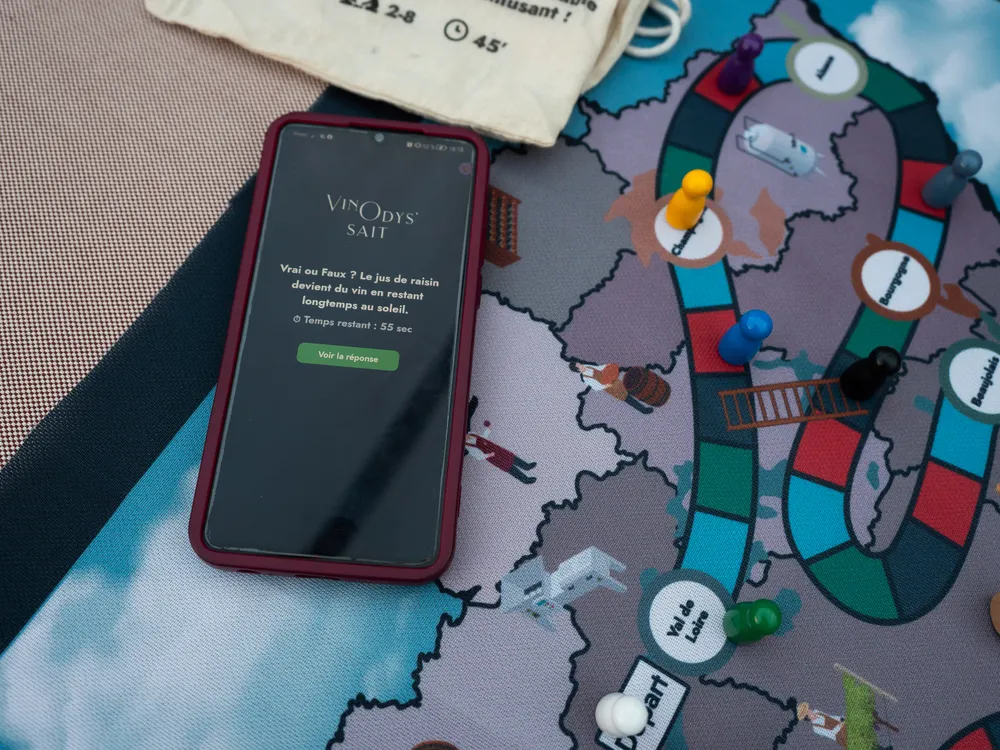
The concept of Hybrid educational game answers a growing need for modernity in the board game sector. New generations of gamers, born with digital technology, seek fluid and evolving experiences. However, the need for physical contact and social presence remains fundamental. Hybridisation allows both these requirements to be met. VinOdys's mobile application acts as an invisible game master: it manages scores, offers timed quizzes, broadcasts sound or video anecdotes, and allows educational content to be updated without needing to repurchase a new edition of the game. It is a sustainable and ecological solution that guarantees an exceptional product lifespan while maintaining a high level of engagement for participants.
Technology enriches sensory pedagogy by providing new tools and methods for engaging learners' senses. This can include: * **Multi-sensory learning platforms:** Interactive software, apps, and websites that combine visual, auditory, and even tactile elements (through haptic feedback devices) to create immersive learning experiences. * **Virtual and Augmented Reality (VR/AR):** VR and AR can transport learners to different environments, allowing them to experience concepts in a more tangible and memorable way. For example, students could virtually walk through a historical site or interact with a 3D model of a cell. * **Digital storytelling and multimedia:** Creating or accessing videos, animations, podcasts, and interactive simulations that appeal to different senses and cater to diverse learning styles. * **Assistive technologies:** Tools that help learners with sensory impairments access educational content. This includes screen readers, magnification tools, communication devices, and technologies that convert text to speech or vice versa. * **Gamification and simulations:** Using game-like elements and realistic simulations to make learning more engaging and allow for safe, hands-on exploration of concepts. * **Data collection and analysis:** Technology can help educators track student engagement with sensory learning activities and analyse the effectiveness of different approaches, allowing for personalised learning pathways. * **Remote collaboration and access:** Technology enables students to engage in sensory learning experiences remotely, connecting them with resources and peers regardless of their physical location. In essence, technology expands the possibilities for sensory pedagogy, making learning more accessible, engaging, and effective for a wider range of students.
In a Hybrid educational game, technology is a lever for personalisation. To VinOdys'sait, the application allows questions to be adapted to players« real-time skill level. This intelligent »gamification" prevents beginners from becoming frustrated by overly technical questions, while also challenging experts with in-depth tasks. Learning thus becomes adaptive. Furthermore, the use of digital technology allows for the integration of high-definition visuals of wine regions, explanatory diagrams on soil geology, or interviews with winemakers. These varied materials engage different cognitive channels (visual, auditory, kinesthetic), which maximizes information retention. Learning is no longer solely through reading, but through multi-sensory interaction.
This synergy between cardboard and pixel is particularly effective for technical subjects. The application can, for example, guide players through a comparative tasting session by providing precise aromatic descriptors at the right time. The Hybrid educational game becomes a true personal coach. He guides the group without ever overshadowing the sociability. The players remain visually connected, communicate verbally, and handle the physical cards, while the app takes care of the complex logistics of knowledge. It is this «magic» of hybridisation that makes learning about oenology so rewarding: it feels like you're having fun, just like during a classic game, while still coming away with genuine technical expertise.
Odys'sait: a pioneering vision of tomorrow's gaming
Manon Routhiau's choice to position her company in the niche of Hybrid educational game demonstrates bold strategic vision. In France, a country with a tradition of games and wine, introducing digital elements into a board game is a daring but necessary gamble. The company Odys’sait proves that digital can be a partner to culture, not a competitor. By developing its own technological tools, the company controls the entire user experience, ensuring perfect coherence between the physical components and the software interface. This technical mastery is a mark of quality and seriousness for players who invest in a durable, high-end game.
The future of board games will inevitably involve these mixed solutions. The Hybrid educational game It allows us to address the challenges of tomorrow: personalised education, constant renewal of content, and reduction of material footprint. VinOdys’sait is only the first chapter of an adventure that could extend to many other cultural themes. By combining the charm of board games with the infinite power of the web, Odys’sait creates a bridge between generations and practices. It is an invitation to rediscover the joy of learning, where technology remains discreet to make way for the essential: sharing, curiosity, and wonder at the richness of our global heritage.
-
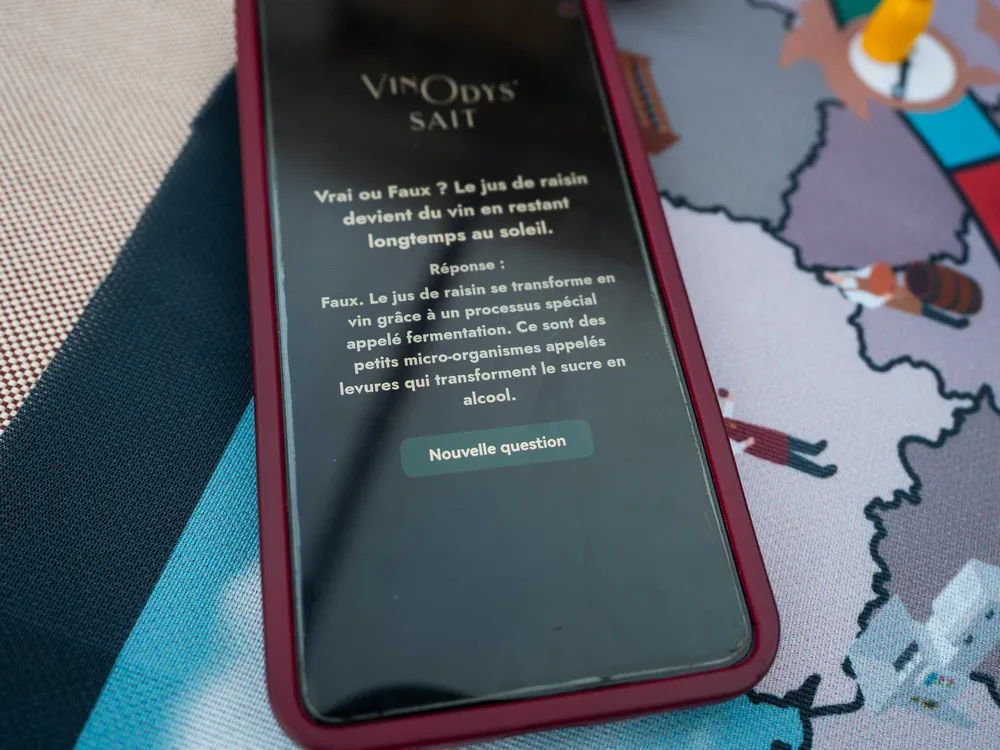
Why the wine board game is transforming wine education
The world of wine is an invaluable French treasure, but learning about it is often perceived as an austere discipline, reserved for an elite group of insiders. Faced with this observation, a new playful consumption trend is emerging: the Wine board game. Far from theoretical manuals and lectures, this format favours interaction, sharing and discovery through experience. VinOdys’sait, the company's flagship project Odyssey, precisely fits into this dynamic of cultural democratisation. By transforming grape varieties, terroirs and winemaking techniques into captivating game mechanics, this medium allows everyone to grasp the basics of oenology without the pressure of judgment. The stakes are high: to transform a classic tasting into a true intellectual and sensory adventure, accessible to novices and enlightened amateurs looking for challenges alike.
the success of a Wine board game rests on its ability to create a bridge between the pleasure of entertainment and the rigour of knowledge transfer. In a society where «experiential» experiences are taking precedence over simple consumption, playing around a bottle becomes a strong social act. VinOdys’sait does not merely pose questions; it invites players to explore the wine regions of France and beyond, to understand the influence of climate on taste, and to memorise aromas through playful repetition. This approach breaks down the psychological barriers that often surround the world of wine. One is no longer afraid of making mistakes, as error is part of the game and even becomes a lever for progress. Ultimately, the game becomes a powerful cultural mediator that brings generations together around a common heritage.
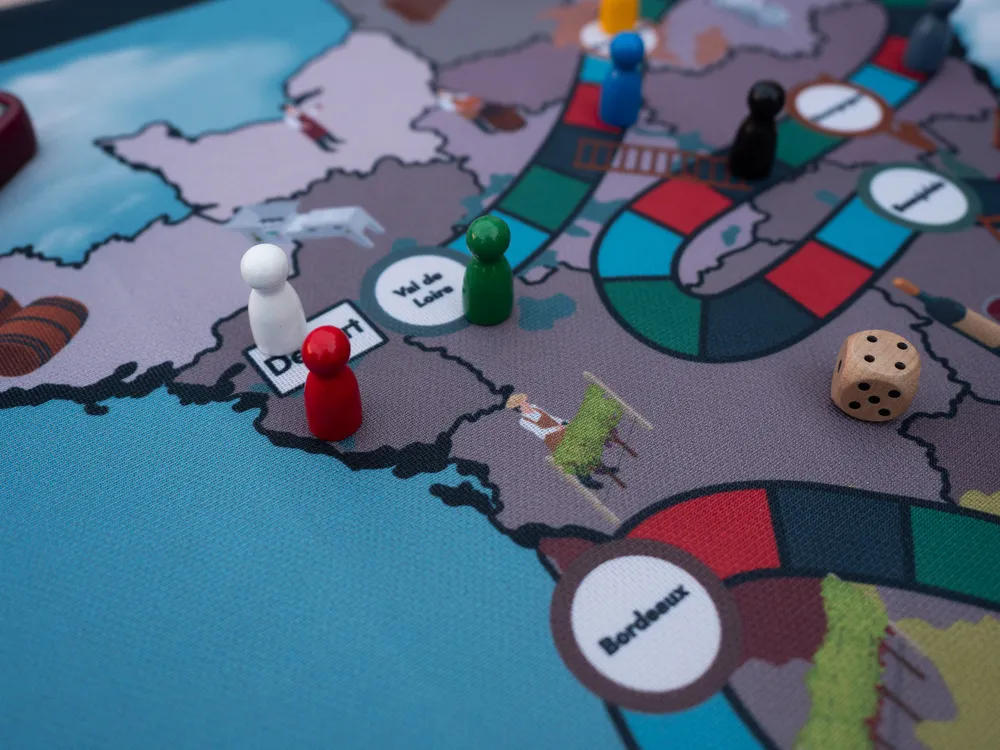
An interactive game board for exploring vineyards with passion
The design of a good Wine board game requires a subtle balance between aesthetics, ergonomics and scientific precision. With VinOdys'sait, The physical components – the board, dice, and pawns – have been designed to offer immediate immersion. Each visual element is an invitation to journey through wine regions. The board is not just a simple path; it is a reflection of a complex wine geography that players learn to decipher over the turns. This tactile dimension is paramount because it promotes memory anchoring. By moving their pawn on the fabric board, the player activates different brain areas than those stimulated by passive reading. This is where the strength of the Odys'sait method lies: transforming raw information into a living, shared memory.
Furthermore, the innovation of this project lies in its hybrid nature. While the physical board ensures the user-friendliness and human contact essential for any game, the companion app enriches the experience with dynamic content. This makes it possible for games to be refreshed infinitely and for content to be adapted to developments in the wine world. Unlike a classic board game that can become obsolete, VinOdys remains alive. This complementarity ensures a rare depth of play, capable of holding players' interest in the long term. Players don't just play to win; they play to explore, to understand the nuances of a Bordeaux or a Loire wine, and to share this newfound expertise during future dinners or visits to wine producers.
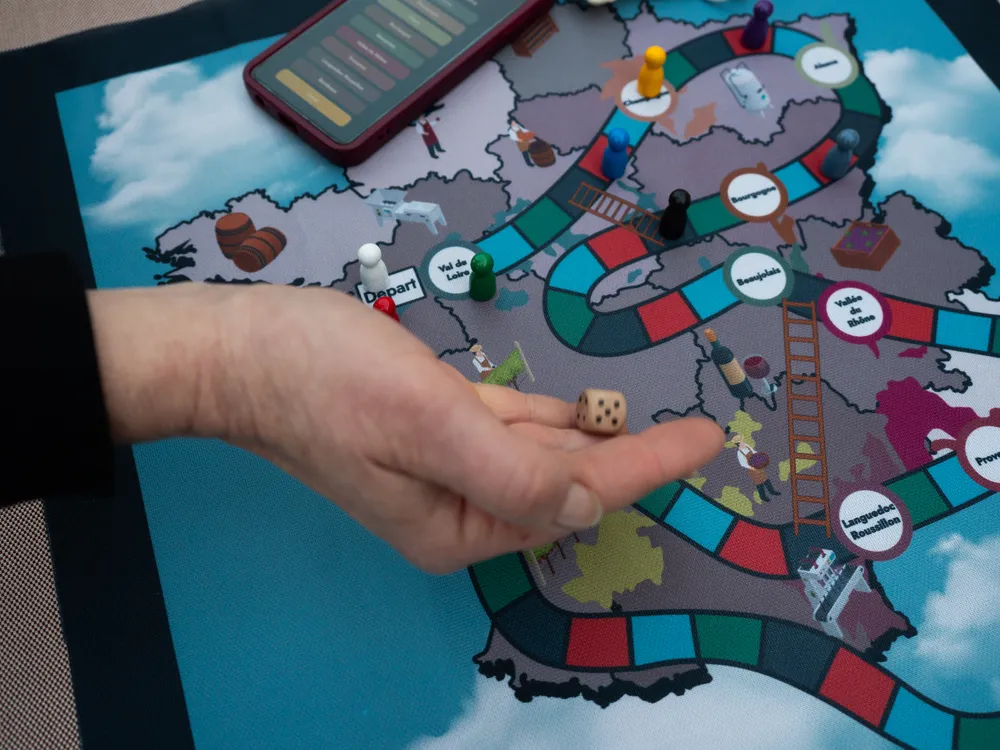
Friendliness: the secret to successful knowledge transfer
Beyond pedagogy, the Wine board game It fulfills an essential mission: to recreate authentic social bonds. At a time when digital technology can sometimes isolate us, gathering around a table for a game of VinOdys'sait is an enchanted interlude. The game encourages the exchange of opinions, the confrontation of feelings during tastings, and mutual support among participants. It is in this supportive environment that learning is most effective. We learn better when we laugh, when we are surprised, and when we share our discoveries with loved ones. The Odys'sait company has understood that wine is above all a drink for sharing, and its game is a natural extension of that.
VinOdys’sait’s ultimate goal is to guide the player towards greater autonomy and self-confidence when faced with a wine list or during a purchase at a wine shop. By mastering the codes through the game, the enthusiast becomes a more informed and responsible consumer. They learn to appreciate the work of the winemaker, to understand the environmental challenges of modern viticulture, and to value the diversity of terroirs. The board game thus becomes a tool for civic and cultural education, proving that entertainment can have a profound social impact. By focusing on content quality and technological innovation, Manon Routhiau and her team offer more than just a game box: they offer a fun and lasting gateway into the fascinating world of oenology.